About USINO
What is USINO?
USINO AI PTE. LTD. is a Singapore-incorporated investment company that invests its own capital across AI infrastructure, semiconductors, defense, energy, and healthcare. We also continue to publish independent research on the AI and technology supply chain corridor between the United States and Asia, particularly China — tracking how policy decisions, corporate developments, and geopolitical shifts on one side of the Pacific create consequences on the other.
What is NEXUS?
NEXUS is how our intelligence is delivered. It is a conversational research platform: ask a question about any node in the AI supply chain and receive an institutional-grade read-through in seconds — named companies, tickers, tier-by-tier supply chain mapping, and the cross-market implications most research misses.
You can try it at nexus.usino.ai. Your first queries are free and no account is needed to start.
Who is USINO for?
Today, USINO AI’s primary activity is investing its own capital across the AI and technology supply chain. Our published research — the Brief and Insights — remains open to anyone. USINO NEXUS’s free and academic/media tiers are aimed at researchers, journalists, and analysts studying the AI supply chain, by invitation and request only.
Is USINO affiliated with any government, political body, or financial institution?
No. USINO is fully independent. We have no commercial relationship with any government, political party, company, or financial institution. We do not accept advertising or sponsored content. Our research reflects our own analytical conclusions — nothing else.
What does USINO stand for?
USINO represents the corridor our research covers — the United States, and the Indo-Pacific including China, Northeast Asia, and Southeast Asia. The name reflects our core focus: the intersection where US and Asian technology, policy, and capital meet.
Access and tiers
What does it cost to use NEXUS?
NEXUS access runs across two levels, both free during this beta period.
| Level | Access |
|---|---|
| L1 — Open | 3 queries per day, free. No account needed for your first query. |
| L2 — Analyst | Complimentary, for academic researchers & media only. Deeper disclosure on sources and supply chain tiers. |
How do I get L2 (Analyst) access?
USINO NEXUS is in beta. L2 (Analyst) access is reserved for academic researchers and media, by invitation and request only. There is no charge during this period.
To request access, sign up at nexus.usino.ai and then email info@usino.ai — or use the Request access button inside the app, which does it for you. We will upgrade your account manually.
Is the published research free?
Yes. The Daily and Weekly Brief and all Insights articles are free to read on this site, and always will be.
What is the Daily and Weekly Brief?
The Brief covers the most significant company-level developments across the US-China-Asia AI supply chain, one key policy or regulatory move, USINO’s Balanced Take, and a forward-looking Radar section flagging what to watch next. Published on alternate days, with a weekly recap. Free on the website.
What are Insights?
In-depth articles expanding on the themes in the Brief — named companies, specific supply chains, original analysis. Free on the website.
Research methodology
How does USINO conduct its research?
Two things carry the USINO name, and they work differently. We think you should know which one you are reading.
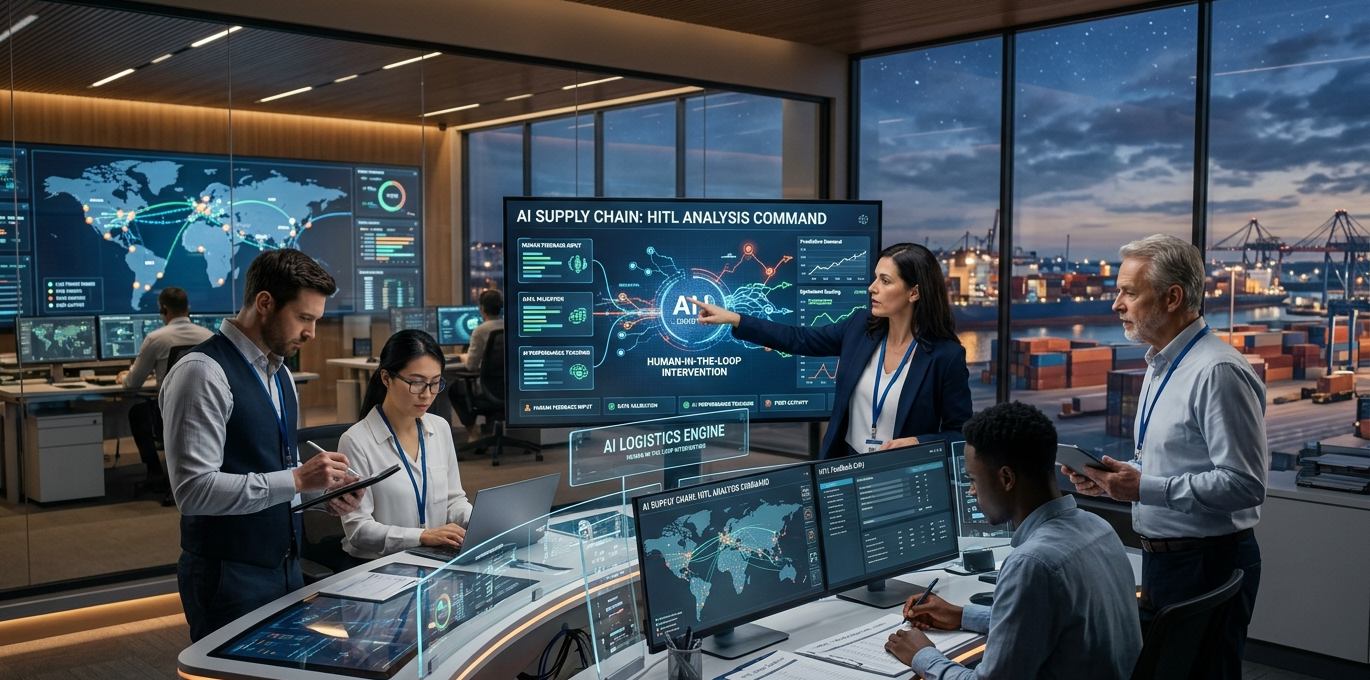
Published research — the Brief and Insights — is human-in-the-loop. AI tools scan and synthesise large volumes of primary sources across multiple languages and jurisdictions. Human analysts then verify, contextualise, and apply independent judgement to everything the AI surfaces. Nothing is published without human review. The AI accelerates the research. Humans determine what it means.
NEXUS is automated. When you ask NEXUS a question, the answer is generated at that moment and no analyst reviews it before it reaches you. It searches USINO’s own knowledge base first — the accumulated body of our published research and supply chain mapping — and only then extends to wider sources. This is what makes NEXUS fast, and it is also why NEXUS output is a research starting point rather than a finished USINO position.
What sources does USINO draw on?
Our own knowledge base comes first. USINO maintains a proprietary body of supply chain intelligence — company and component mapping, tier-by-tier supplier relationships, and the full archive of our published analysis. It is built and curated by us, it grows with every piece of research we produce, and it is not available anywhere else. Both our published research and NEXUS start there before reaching for outside sources.
Beyond that we draw on primary sources wherever possible. These include official publications from the US Bureau of Industry and Security, the US Trade Representative, China’s Ministry of Industry and Information Technology, China’s Ministry of Commerce, the US Securities and Exchange Commission, and equivalent regulatory bodies across Asia.
We also draw on earnings call transcripts, corporate filings, and verified industry publications including Nikkei Asia, Digitimes, Reuters, and specialist semiconductor and technology trade press. We do not rely on anonymous sources or unverified social media content.
What is USINO’s analytical edge?
Where consensus research stops at the listed names, we go further — using financial triangulation to unmask anonymised suppliers in filings, mapping supply chains from the AI model layer down to the component makers, and tracing every development through to its read-through on US, Taiwan, Korea, Japan, Hong Kong, and China A-share tickers.
What is the Balanced Statement?
The Balanced Statement is USINO’s editorial commitment to intellectual honesty. Our analysis closes with a structured summary presenting the strongest legitimate case from the US-led perspective, and the strongest legitimate case from China’s perspective, before drawing our analytical conclusion. We recognise that Asia is not a monolithic bloc — nations across the region navigate their own distinct positions between these two poles, and our analysis reflects that complexity.
We do this because the US-China technology relationship is genuinely contested terrain. Informed people on both sides hold legitimate positions. Readers who only encounter one side of the argument are not fully informed. USINO does not advocate for either side. We map the terrain as accurately as we can and let readers draw their own conclusions.
What analytical frameworks does USINO apply?
Our analysis works on three levels at once.
Company level. We assess the competitive position of the business or policy subject under review — what it is strong at, where it is exposed, and what could change either — and we do the same for the wider ecosystem it sits in.
Macro level. We map the political, economic, and technological forces shaping the subject, paying particular attention to how a regulatory change in one country cascades through supply chains in others.
Risk and stress-testing. Most research tells you what is likely to happen. We also ask what would have to be true for that view to be wrong — and what it would cost you if it were. Every conclusion is stress-tested against the case that contradicts it: the supplier that turns out to be single-sourced, the policy that moves faster than expected, the demand assumption everyone has quietly copied from the same forecast.
This is risk management applied to research rather than to a portfolio. It consistently surfaces exposures that conventional forward-looking analysis misses, and it is the layer that most distinguishes USINO’s work from standard industry research.
How does USINO handle accuracy?
In published research, every factual claim is traced to a primary or verified secondary source before it goes out. Where a figure is estimated or projected rather than confirmed, our analysts label it as such. Where sources conflict, we present both versions and explain the discrepancy rather than selecting the more convenient number. If we make an error we correct it transparently and notify readers who received the affected edition.
In NEXUS, no analyst reviews an answer before you see it. It draws first on our own curated knowledge base, which is where its accuracy comes from — but it is an automated system and it can be wrong. Treat its output as a fast starting point, and verify anything you intend to act on.
Our research runs across multiple languages and multiple AI models rather than a single one. Chinese-language capability matters here: coverage of Chinese companies and policy developments that depends on English-language reporting alone is always working at one remove from the source.
Disclaimer
Is USINO’s content investment advice?
No. All USINO content — including the Brief, Insights, and any output from NEXUS — is produced for informational and educational purposes only. Nothing published by USINO constitutes investment advice, a recommendation to buy or sell any security, or a solicitation of any investment decision.
Valuation frameworks and scenario analyses are analytical tools. They are not price targets or investment recommendations. Readers must conduct their own due diligence and consult qualified financial or legal advisors before making any investment decision.
USINO is not a licensed financial advisor, broker, or investment manager in any jurisdiction.
How does USINO handle conflicts of interest?
USINO has no commercial relationships with any company it covers. We do not accept payment from companies to be featured, reviewed, or covered in any capacity. We do not hold positions in any securities mentioned in our research.
USINO AI PTE. LTD. is incorporated in Singapore.